
“The Simpsons” – it’s a show I’ve talked about a lot recently. I did, after all, write three whole blog posts in recent weeks talking about the show’s first three seasons.
You may be wondering why it’s taken me so long to write a blog post about the fourth. Well, I decided to do things a little bit different this time, and instead talk about seasons four and five together. The two go hand-in-hand in terms of showcasing some of the show’s best moments. Seasons four and five are when “The Simpsons” truly became “The Simpsons.” It’s when the show stopped being similar to all the sitcoms it lampooned and instead took full advantage of the fact that it’s a cartoon. It’s when the jokes became a bit funnier, when situations became zanier and when the show really hit its stride.
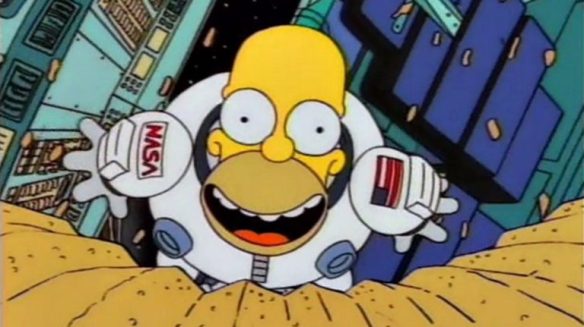
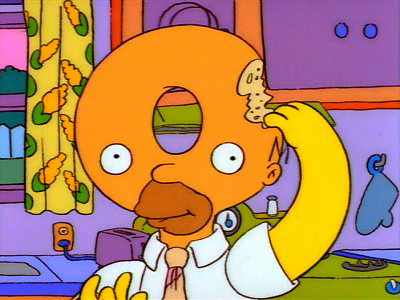
Today, instead of listing out my favorite five episodes of each season, I’m going to talk about one episode from each, and detail how it’s representative of the season as a whole. But before I do that, I will talk about a few of the other moments that really stood out: finally getting to hear Maggie’s first word (and Homer leaving the room right before she says it) in “Lisa’s First Word,” Homer’s bitter feud with Barney over their snow plow businesses in “Mr. Plow,” Homer’s trip to space with Buzz Aldrin when he accidentally lets a whole bunch of ants loose in “Deep Space Homer” (“And I for one welcome our new insect overlords”) and the trial for Homer Simpson’s soul after he sells it for a donut in “Treehouse of Horror IV…” and then eventually he becomes one.
Now, onto the two episodes that I thought were not just the best of each season, but also reflective of the writing for the seasons as a whole.
“Marge Vs. The Monorail”
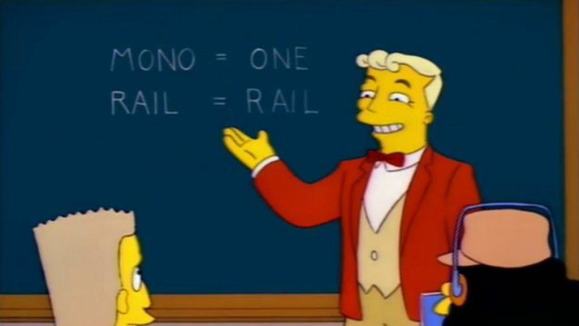
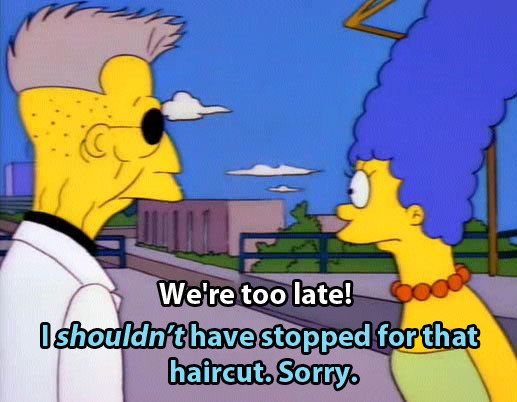
This season four episode tops many fans’ lists as one of the best episodes of the show, and it’s easy to see why. This episode was written by Conan O’Brien during his short tenure on the show and it’s stacked with jokes. If one doesn’t land, another one is right behind it and will knock you out of the park. Seriously, if you don’t laugh at Homer’s “I call the big one bitey” or the fact that a scientist pivotal to the plot stops for a haircut on his way to save the day, then I don’t know what to tell you… other than, maybe watch a different show.
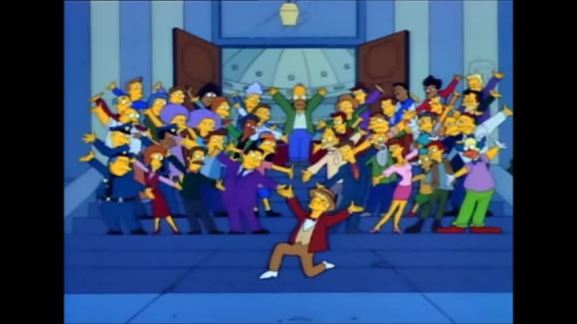
If you haven’t seen this episode, it’s all about a monorail that’s pitched to the people of Springfield in a song and dance number by a conman voiced to perfection by the late great Phil Hartman. The song he sings is indeed catchy, and it’s easy to see how a town like Springfield, which has already been shown to have mob mentality, would eat it up.
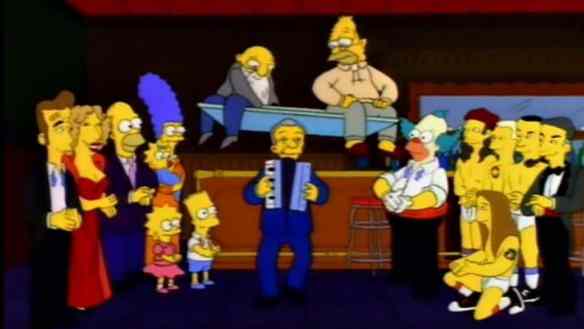
This episode also features a couple of guest stars. Of course there’s Phil Hartman who I mentioned just a moment ago, and there’s also Leonard Nimoy. Seasons four and five saw plenty of guest stars… something the show would be well-known for as it went along. In these two seasons alone there were: Jon Lovitz, Bob Hope, Tom Jones, Adam West, Linda Ronstadt, Brooke Shields, George Harrison, The Ramones, David Crosby, James Brown and James Woods just to name a few. The season finale of season four, “Krusty Gets Cancelled,” features Elizabeth Taylor, The Red Hot Chili Peppers, Barry White, Johnny Carson, Luke Perry and Bette Midler… in just one episode!
Okay, that weird tangent is over.
What this episode does best is fully display all of the main characters. Marge is against the monorail because she wants to see the town’s money go toward fixing up Main Street. Homer sees the monorail as a career opportunity and gets hired on as the monorail’s conductor. Bart helps Homer train to be a conductor. Lisa is initially against the monorail until Hartman’s conman character talks to her like an adult and makes her feel smart, conning her into being on his side and showing just how great he is at it.
But at the same time, this episode does something I talked about briefly earlier: it realizes that the show is a cartoon. Take for example how Homer saves the day. When the monorail breaks and it won’t stop, he has to use an anchor, which takes out a big chunk of roads as it glides along and then, ultimately, it gets sunk into a giant donut. There’s also a great visual gag early on in the episode involving a truck full of popcorn that I really wish I could find video of to put in here.
Season four as a whole saw the show getting sillier and sillier. There’s a whole episode in this season about the town’s annual “Whacking Day,” which sees everyone brandish clubs and chase snakes into the center of town before they whack them to death. It’s a bizare concept that in the show’s first three seasons wouldn’t have played the same way. That’s the beauty of season four: it went in a weird direction, but it worked.
“Cape Feare”
Just like the previous episode, this one is full of laughs. Season five in general is full of laughs, with some great episodes throughout. With that said, it was easy to pick this as my favorite.
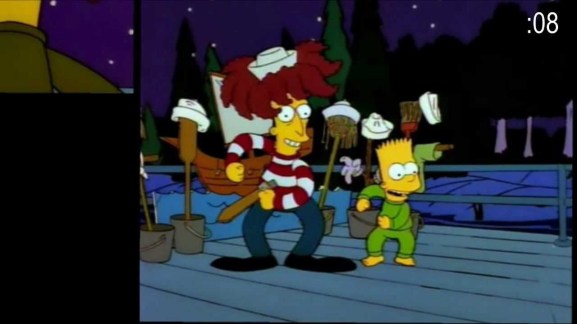
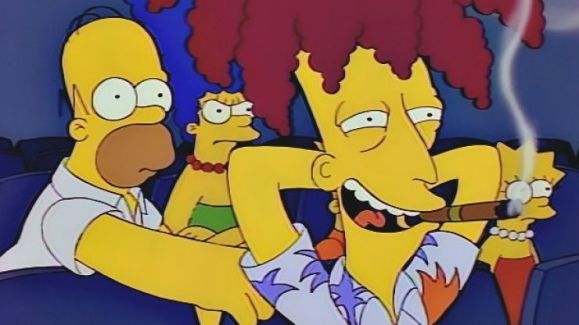
“Cape Feare” brings back Sideshow Bob, the delightfully evil character voiced by Kelsey Grammer, who just wants to kill Bart. While Sideshow Bob’s first couple of episodes were good, this is the one that raised the bar.
One thing this episode does really well is the way it uses references to tell the story. When this episode first premiered in 1993, Martin Scorsese’s remake of “Cape Fear” was pretty well known, and to put Sideshow Bob in the place of Robert De Niro’s Max Cady makes a lot of sense. Whereas Cady is out for revenge when he gets out of prison, so is Bob. The many allusions to the film throughout the episode are done jokingly, but they’re also used to help move the story along. They’re not just references for the sake of references, which I think is the problem with a lot of humor today. And these kind of references can be seen throughout season five (and season four as well).
For example, there’s the ending of “Lady Bouvier’s Lover,” in which Abe Simpson stops Jacqueline Bouvier from marrying Mr. Burns, and they then take off in an homage to “The Graduate.” Speaking of Mr. Burns, he features in a lot of different references. I mean, there’s an episode called “Rosebud” that’s all about him finding the teddy bear he had as a child after all these years… and that’s just one of MAAAAAAANNNNNNNNNNY references to “Citizen Kane” that involve Mr. Burns. He’s also seen in a Hannibal Lecter-inspired mask in the previously mentioned “Marge Vs. The Monorail.” All of the references are used in ways to move the story along and are essential to the story without detracting from it.
“Cape Feare” also has one of my favorite “Simpsons” moments:
So, there you have it. Seasons four and five of one of my favorite shows. They’re both excellent. Right now I’m only two episodes into season six, but based on those and my recollection of the season’s 25 episodes, I’m in for a treat. Seriously, the first two episodes are full of laughs.
I’ll see you all in a week or two when I talk more about that. Until then, take care, and be good to each other.
 Tyler Talks Movies